Armed Security Solutions for Large Healthcare Facilities
21:55
Armed Security Solutions for Large Healthcare Facilities:Best Practices for Safety and Patient Care
Published: | Last Updated:
The short answer: Armed security can make sense in the highest-risk areas of a large healthcare facility, like emergency departments, parking structures and after-hours entrances, when it's paired with strong de-escalation skills, clear written policies, and close coordination with clinical staff. The goal is a visible deterrent that supports patient care rather than disrupting it.
Healthcare campuses run around the clock with vulnerable patients, stressed families and valuable medications. CDC research shows healthcare workers face elevated risk of workplace violence, and the Joint Commission expects accredited hospitals to have workplace violence prevention programs. Signal of Lincoln provides armed and unarmed officers for facilities in Lincoln and southeast Nebraska.
Where Armed Security Fits in a Healthcare Facility
High-Risk Areas
Emergency departments, behavioral health units, pharmacy areas and parking structures are where a visible armed presence is most often considered. In calmer areas, like patient floors and specialty units, a lower-profile approach usually fits better.
Support for Clinical Staff
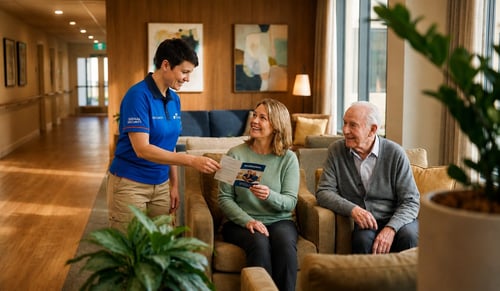
When a situation with a patient or visitor becomes tense, officers trained in de-escalation can step in and help calm things down so nurses and physicians can stay focused on care. Talking comes first. Armed officers give the facility more options if a situation becomes serious, but clear procedures matter more than the firearm.
Clear Written Standards
Post orders should define where officers are posted, how they communicate with staff, and exactly when they observe, escalate or call law enforcement. Written policies on how firearms are carried and stored, and how incidents are reported, remove confusion in an emergency.
Balancing a Visible Presence With Patient-Centered Care
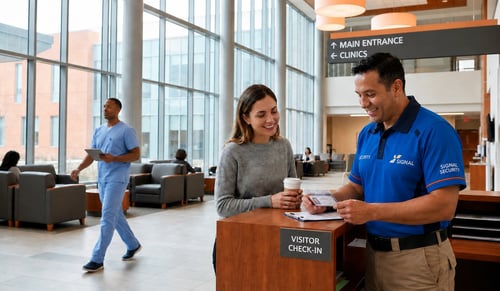
Higher visibility in lobbies, parking structures and emergency departments, where deterrence matters most
A calm, approachable manner near patient areas
Lower visibility in sensitive units where patients need a quiet environment
Plain, friendly language when explaining why security is present
Armed officers work best when they're connected to your facility's emergency procedures, radios or phones, and the people who need to know when something happens. Agree up front on who officers call first, how they reach clinical leaders, and how incident information is shared while protecting patient privacy.
How Signal of Lincoln Does This
Officers chosen for reliability, professionalism and judgment, because in healthcare the way an officer talks to people matters as much as anything else.
Three layers of training. Officer Pathway training, Signal of Lincoln onboarding, and on-the-job training for your facility and post orders. After 90 days, officers move into a deeper development pathway with their supervisor.
Your escalation procedures come first, with a supervisor always notified.
Defined scope. Our officers observe, report and support your staff. They are not medical providers.
Armed or unarmed, based on your site. We'll recommend what fits each area of your facility rather than one approach for everything.
Questions to Ask an Armed Security Provider
What to Ask
What a Good Answer Sounds Like
How are officers trained, especially in de-escalation?
A clear, layered training process, training specific to your facility, and ongoing development after officers start.
Where would you recommend armed versus unarmed coverage?
A recommendation based on walking your facility, not a one-size-fits-all answer.
How will officers follow our procedures?
Written post orders built around your escalation contacts and emergency plans.
What do reports look like?
A sample report that's clear and specific while protecting patient privacy.
FAQs: Armed Security in Large Healthcare Facilities
Does a hospital need armed security?
Not always. It depends on the facility's risks, location and history. Many facilities use armed officers in a few high-risk areas and unarmed officers elsewhere.
What policies should be in place before adding armed security?
Written policies on firearm carry and storage, use of force, incident reporting and how officers coordinate with clinical staff. Many facilities also have their legal team review these policies before deployment.
How do armed officers avoid disrupting patient care?
They focus on de-escalation, keep a lower profile in patient areas, and stay highly visible where deterrence matters most, like lobbies and parking.
What should hospitals track to measure their security program?
Incident trends, response times, staff feedback and training completion. Reviewing those regularly with your security partner helps you adjust coverage where it's needed.
Troy Nielsen owns and operates Signal of Lincoln, a locally owned security company serving Lincoln and southeast Nebraska. A Nebraska native, Troy grew up in small towns across the state, including South Sioux City, Lexington and Cozad, and those communities shaped how he leads: show up, do what you said you'd do, and take care of the people around you. With more than 20 years of experience as a business owner, Troy took ownership of Signal of Lincoln in September 2024 and stays hands-on with clients and officers every week. Troy is a graduate of Buena Vista University with a degree in Sports Marketing, where he was a four-year letter winner and captain of the football team. He's also an Eagle Scout. Those experiences built the foundation of leadership, discipline and accountability he brings to Signal every day.